A complete learning product, from the first visit to lessons, progress and certificates
Vibecode.how teaches people to build websites, Telegram products and automations with AI agents. We built the public site and the learning environment as one connected product instead of splitting sales, content and study progress across unrelated services.
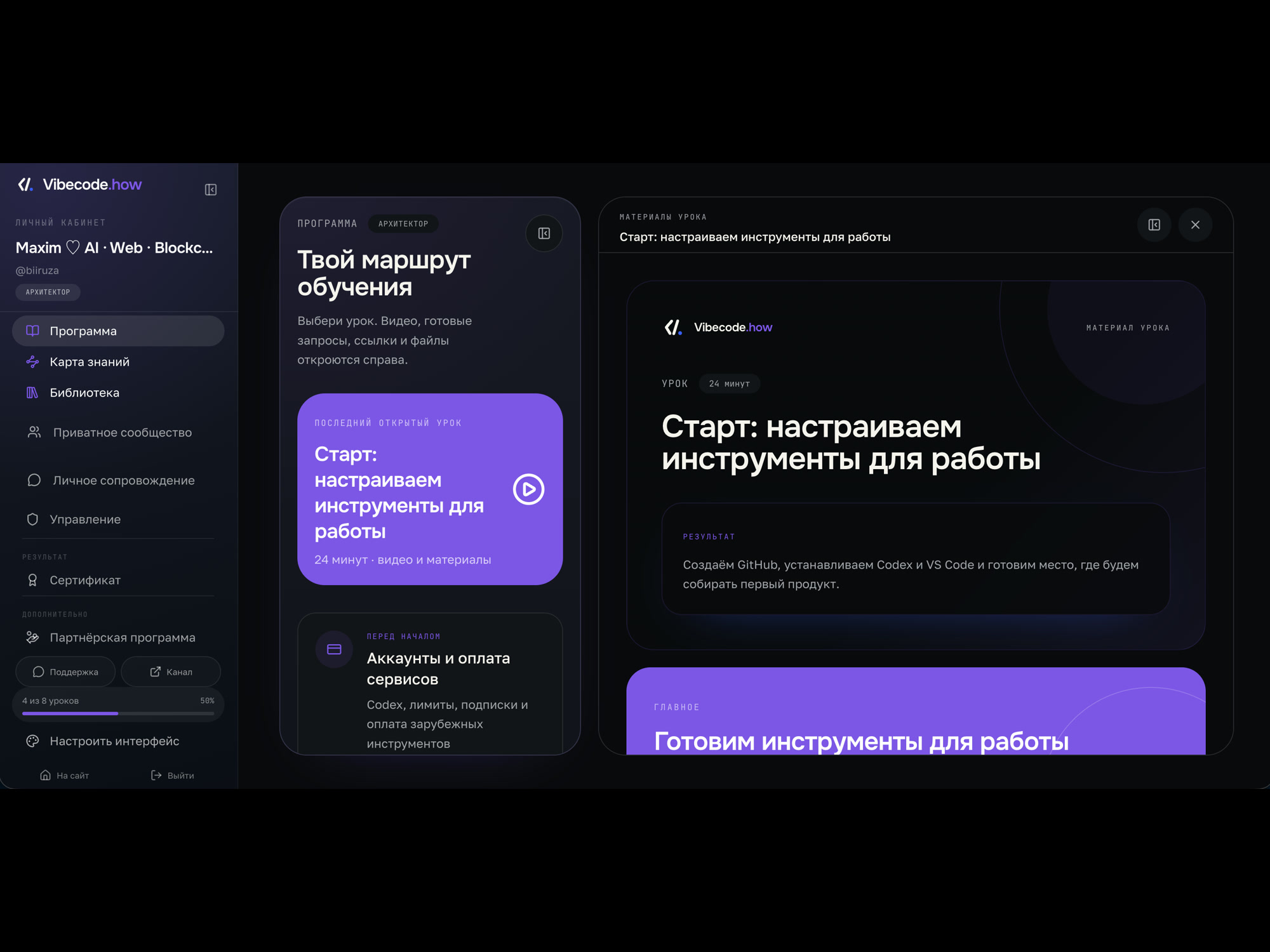
One system for selling, learning and continuing the work
A landing page and a folder of videos would not support the way the program works. Students needed a clear route through the material, quick access to prompts and tools, visible progress and one account for study, payments, support and certificates. The team needed to manage access and content without rebuilding the frontend for every change.
- Built the curriculum as structured programs, modules, lessons and reusable content blocks rather than fixed pages.
- Designed a responsive student account around the learning route, with lesson state and the main action always visible.
- Added a visual knowledge map for navigating the curriculum and keeping personal notes next to the relevant material.
- Connected Telegram identity, payments and entitlements so access is issued by verified backend events, not by a return URL.
The surfaces that make the platform work
Public website, program pages and a free entry lesson
Student account with lessons, video, prompts, files and progress
Knowledge map, searchable tool library and certificate flow
Telegram login, payments, access tiers, referrals and admin tools
Access and learning state live on the backend
The frontend is a React 19 and TypeScript application built with TanStack Start. A separate Fastify API on Railway owns users, sessions, programs, lesson progress, purchases and entitlements in PostgreSQL. Telegram provides identity, Lava.top handles checkout, and signed Cloudflare R2 URLs protect private media. Administrative actions are role-checked and written to an audit log.
Vibecode.how now works as one product across acquisition and learning. A person can understand the offer, enter through Telegram, open the right program, continue from the last lesson, use the knowledge map and library on desktop or mobile, and receive a verifiable certificate after completing the required material.
Evidence boundary
- The case shows implemented product flows and does not claim student income, employment or business results.
- Personal account data in the screenshots is demonstrational; private student and payment data is not exposed.
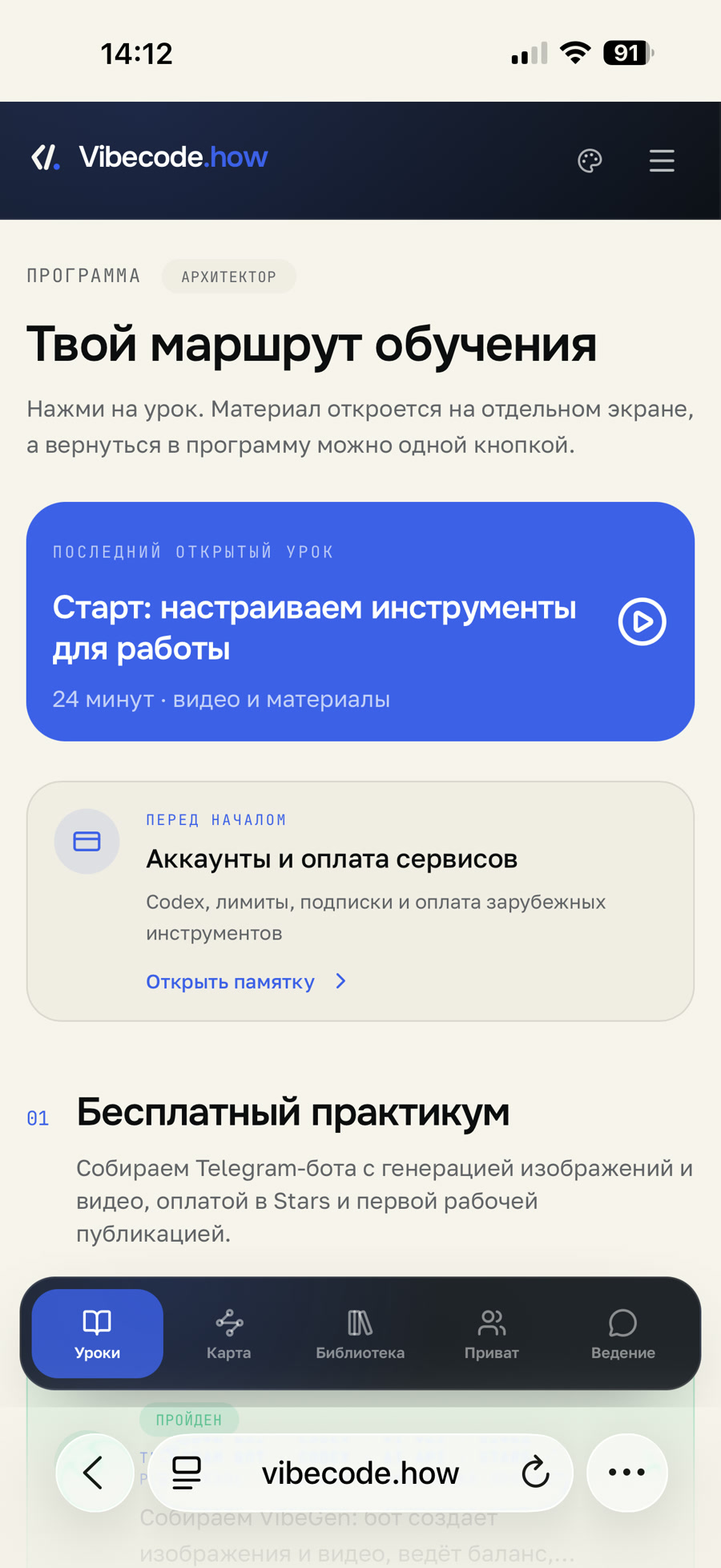
The workflow remains clear on a phone
The mobile surface preserves the primary product action, hierarchy and account context instead of reducing the page to a compressed desktop layout.
What buyers usually need to know
- What type of education platform is Vibecode.how?
- It is a practical learning platform for building websites, Telegram products and automations with AI-assisted development tools.
- How are the learning formats organized?
- Access levels separate self-directed study, community support and personal product guidance. The backend assigns the corresponding materials and features after a verified purchase or an administrative grant.
- What is inside the student account?
- Programs, structured lessons, video and text materials, reusable prompts, files, progress, a visual knowledge map, a searchable tool library and certificate access.
- Can Lynto Labs build a similar academy or LMS?
- Yes. The first scope can include the commercial site, curriculum structure, account access and content model, with payments and deeper learning workflows added by stage.
Building an academy or a product with paid access?
We can connect the public site, content, payments, user access and the working account into one maintainable system.