A multi-surface community platform for events, travel, experts and commerce
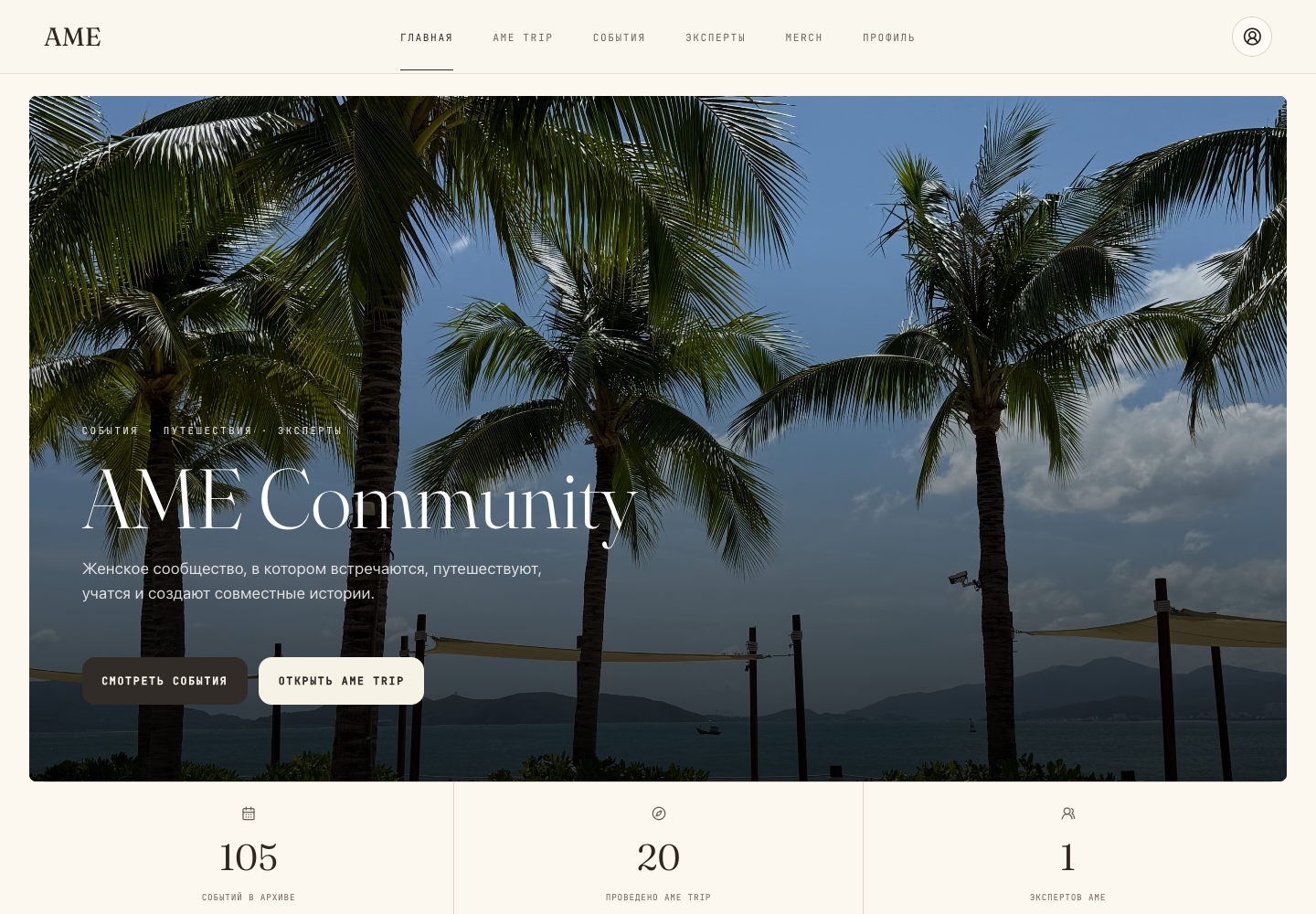
AME Community is a production ecosystem that brings together public discovery, community membership and several operational product lines.
What the product needed to solve
Events, group travel, expert services, educational materials and merchandise have different content and transaction requirements. The platform needed to keep those flows distinct while preserving one brand, one member relationship and a practical operating model for the team.
- Separated public discovery from Telegram-connected member and purchase workflows.
- Created dedicated product surfaces for events, trips, experts, learning and merchandise.
- Built shared identity, media and administration patterns across the ecosystem.
- Added an editorial layer that can answer practical questions and lead users into the relevant product flow.
The implemented product layer
Responsive community website and member entry points
Events, calendar and expert discovery workflows
AME Trips and merchandise product surfaces
Administration, media delivery and Telegram-connected access
How the system was organized
The platform uses a server-rendered React and TypeScript application with a shared backend, structured media delivery and Telegram-aware account flows. Public web routes remain crawlable, while personal actions and member state stay behind authenticated product boundaries.
The result is one coherent product ecosystem that can present the community publicly and support several operational business lines without collapsing them into one generic catalog.
Evidence boundary
- The case does not publish private member, booking or revenue data.
- Travel, expert and event availability is controlled by the operating team and changes independently of the software.
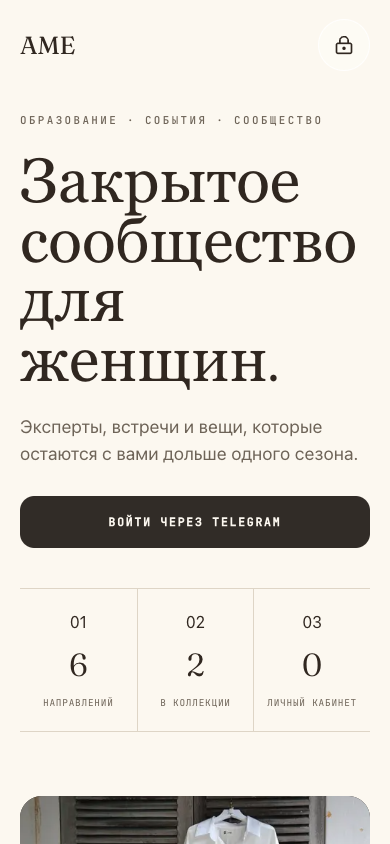
The workflow remains clear on a phone
The mobile surface preserves the primary product action, hierarchy and account context instead of reducing the page to a compressed desktop layout.
What buyers usually need to know
- What does the AME Community platform include?
- It includes public community discovery, events, group trips, experts, education, merchandise and Telegram-connected member workflows.
- Why are the public website and Mini App separated?
- The public website supports discovery and indexable content, while Telegram handles identity and personal actions with less friction for existing community members.
- How are different business lines kept maintainable?
- Events, trips, experts, content and merchandise use separate domain models and interfaces while sharing identity, media, administration and design foundations.
- Can Lynto Labs build a similar community platform?
- Yes. The first release can focus on membership, events and one commercial workflow, with travel, marketplace or education modules added after the operating model is proven.
Building a community product with real operations behind it?
We can structure membership, events, content and commerce as staged product modules with clear ownership and administration.